
Service Lives Here: How Giving Back Strengthens Life at Casa
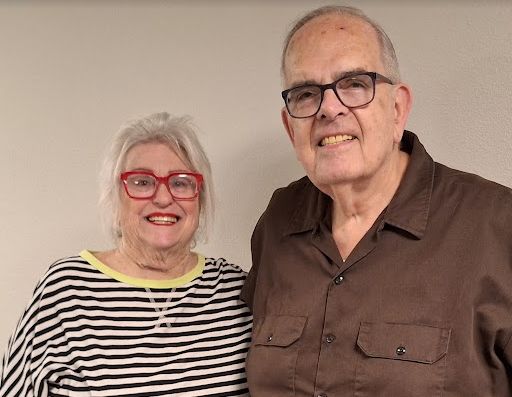
Dr. Martin Luther King Jr. once said, “Life’s most persistent and urgent question is: ‘What are you doing for others?’” For Casa de las Campanas residents Steve d’Adolf and Roberta Mikles, the answer is a whole lot, with heart.
Throughout their careers and their time in the community, they’ve shown that giving back isn’t reserved for a select few. No matter your background, skills or status, everyone has something valuable to offer, and service is something we can all do.
This month, MLK Day’s national day of service is a fitting backdrop for our focus on vocational wellness, one of Casa de las Campanas’ 8 Dimensions of Wellness.
Roberta, a former nurse who moved to Casa in 2022, was drawn to health care and advocacy early on. When she was hospitalized at 16 and kept in isolation with only her parents allowed to visit, she saw firsthand how lonely and vulnerable patients can feel. Later, visiting a cousin with an intellectual disability and schizophrenia in a New York facility “blew her away.”
She was recently elected to our resident council and serves (or has recently served) on several management advisory committees, including health and wellness, building, marketing, safety and transportation. Roberta is also involved with the Jayden T. Gillespie Foundation, started in 2022 by a friend after his son, who had schizophrenia, died by suicide.
Steve and his wife, Pat, moved to Casa in 2018. The former electronics engineer, who’s great at making complex topics easy to understand, has led resident presentations on everything from spotting and blocking harmful emails to accidental inventions and artificial intelligence. “If there’s anything you want to know, you go to Steve,” Roberta says.
For our ongoing wellness blog series, we sat down with Steve and Roberta to talk about how purpose, contribution and meaningful work (paid or volunteer) continue to shape their lives, and how that spirit of service strengthens our community. (Related: Emotional Wellness: A Key to Thriving in Senior Living.)
Share your professional or volunteer background before moving to Casa de las Campanas, and the work you found most meaningful.
Steve: I started my professional career as an electronic engineer and for 15 years worked on the design of some well-known defense industry systems. Later, when I had the opportunity to work in the civilian business sector, I changed jobs and found it much more satisfying to work on projects where my expertise had a positive impact on the company’s success. During my career, I developed what might be considered an unusual philosophy: voluntarily taking on tasks that didn’t just help me achieve my goals, but also what I believed would help my boss succeed and achieve his goals. That ideology helped me become more visible to senior management and be recognized as a valuable employee, something I found very satisfying.
Roberta: My background has always centered around health and advocacy. I started as a registered nurse and psychiatric nurse clinician; then moved into marketing and public relations for a health care company focused on drug and alcohol dependency; and later consulted with developers of retirement communities. For many years, I’ve also volunteered as a patient advocate in nursing homes and dialysis clinics, work that grew out of my father’s experience on dialysis and with a hospital-acquired infection.
Before moving here, I was appointed to a California Department of Public Health advisory council focused on preventing health care-acquired infections in hospitals. Being a patient advocate gave me the most satisfaction. I was a patient advocate everywhere I worked but doing it on a volunteer basis meant the most to me.
What does “vocational wellness” mean to you?
Steve: Vocational wellness for me means being involved in activities that challenge me and give me a sense of purpose, enjoyment and accomplishment. I “officially” retired from corporate life 22 years ago, but when I see something to be done that I feel my talent can be useful for, I jump in. My wife understands I am not someone who is content sitting all day reading a book, but she also wants me to learn that it is OK to sometimes say “no.”
Roberta: When I think of vocational wellness, I think of balance. I like being involved and doing the ‘work’ side of things, but I also know I need to protect my mental and physical health and not get overwhelmed. For me, that means not letting the job part take over and making sure I leave time for the fun stuff. I spend time with friends and do lots of activities here, like making art, playing poker and Rummikub. Vocational wellness, to me, is keeping all of that in balance so I don’t get into a rut.
What skills, talents or experiences from your career or personal life have you found still make a difference at Casa?
Steve: Not long after I started my career, my manager and co-workers noticed I had a knack for explaining things clearly. They said I was knowledgeable, well-organized and confident, so I was often asked to give presentations to different groups in the company. Over time, I stopped waiting to be asked and started looking for opportunities to improve communication wherever I could. Here at Casa, I’ve carried that same approach forward. I look for ways to volunteer and use my communication skills to help strengthen resident life and make campus information easier for everyone to understand.
Roberta: On the marketing committee, my marketing background definitely comes in handy. I’m also an Envoy here, which means I meet with prospective residents at events and talk with them about Casa, what the advantages are and why it is better to move in now rather than wait for a crisis. My nursing background also has been useful. People often come to me with questions like, ‘I’m trying to get this done and I can’t get it through the system. What should I do?’ It might be something simple, such as needing an X-ray or having their doctor follow up. I can suggest how to approach it and how to “work the system” a bit more effectively. Whether it is marketing or nursing, I like using what I know to help people here.
Describe a recent way you’ve given back and how it made you feel?
Steve: I voluntarily give a monthly presentation to independent living residents, as well as residents in assisted living, and our Health Center.
Topics have ranged from How To Recognize and Block Harmful Emails and The History of YouTube to Common Items That Were Invented by Accident and The History of Jigsaw Puzzles. Most recently, I’ve given presentations on artificial intelligence. I found it to be very rewarding to hear from each audience that they appreciated the depth of my knowledge and enjoyed my presentation.
Roberta: I get the most satisfaction from spending time with people who can’t get up and walk around. There’s one woman here who had a stroke, and I visit her often to sit and talk. Seeing her laugh makes me feel really good. People say I’m always laughing, and I guess that helps. I also visit a friend in the Health Center who’s been there a long time. Sometimes she just needs to vent, and I’m there to listen. I stop in on others in the Health Center or over in assisted living, too. It’s simple companionship, and it makes me feel like I’m doing something that matters.
In what ways does Casa make it easier for residents to share their gifts?
Steve: Residents appreciate the support provided by our activities department that adheres to the concepts of the 8 Dimensions of Wellness. The department supports resident groups’ needs by coordinating the availability of the right-sized meeting rooms with the appropriate number of tables and chairs, audio and video capabilities, etc. Such dedicated support is very much appreciated by the residents.
Roberta: We have several management advisory committees, like finance, and health and wellness, where you really use your professional background. Then there are committees for marketing, building and conservation, and safety and transportation. There is also a welcome committee, and we have the chat buddy program, where you regularly visit someone in assisted living or the health center and just spend time with them. It is all volunteer, and there is a huge range of options, so there is really something for everyone.
Have you discovered any unexpected benefits of staying engaged in meaningful work or service?
Steve: When I choose a topic for a presentation, I choose one I want to learn more about. I do extensive research to create a presentation that will be interesting and informative for the audience, while also providing the added benefit of helping me learn more about the subject I have selected, thereby giving me a sense of personal achievement.
Roberta: I’ve made a lot of friends since moving here, but one of the biggest surprises came after my recent cervical spine surgery. I expected it eventually, so the surgery itself was not a shock. What struck me was how many people checked on me and offered help. It was not just close friends, but also people I’d considered acquaintances who reached out to see if I needed anything. I was genuinely and pleasantly surprised by that level of care.
When you think about vocational wellness and service, what kind of example or legacy do you hope to leave?
Steve: I do not think much about a legacy. While I have contributed a lot of my time and energy to helping both residents and management solve problems and resolve issues, I recognize that my contribution is not unique. Many other residents are in their own way using their skills and devoting their time to helping improve life at Casa.
Roberta: I basically have no family. My sister passed away, and her husband lives in Washington state with a large family of his own. We stay in touch, but I have not seen him in a couple of years. I would like to be remembered as someone who helped others and made people laugh.
Live Where Friendliness Fuels Purpose
Whether you love mentoring, leading a committee, teaching a class or simply checking in on a neighbor, it’s easy to stay engaged and feel purposeful every day at Casa.
“It’s the friendliest community and very, very unpretentious,” Roberta says. “We have residents here whose backgrounds would absolutely amaze you.”
Contact us to learn more about how Casa de las Campanas supports vocational and other dimensions of wellness.